


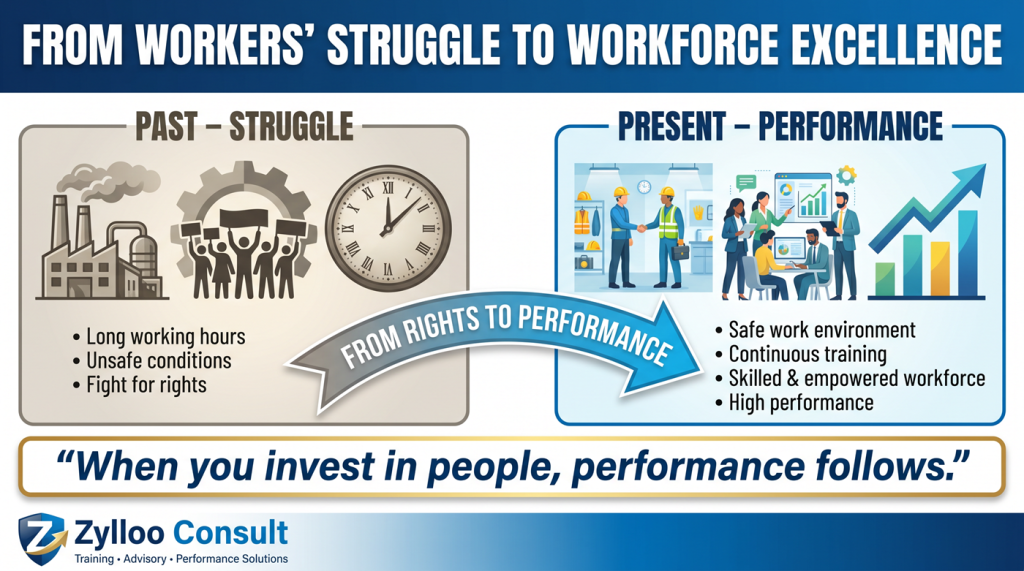
Every year on May 1st, the world commemorates International Workers’ Day, a day deeply rooted in the history of workers’ struggle for dignity, fairness, and better working conditions. Beyond the celebrations, this day serves as a powerful reminder of the sacrifices made to secure rights that many today consider fundamental.
A History Shaped by Struggle
The origins of International Labour Day trace back to the late 19th century, particularly the labor movements in the United States and Europe. Workers at the time faced harsh conditions: long working hours often exceeding 12 to 16 hours per day, unsafe environments, and minimal wages.
One of the most defining moments in this struggle was the Haymarket Affair, where workers rallied for an eight-hour workday. Though the movement was met with violence and repression, it ignited global awareness and solidarity among workers.
Over time, these struggles led to major milestones:
- The recognition of the eight-hour workday
- The establishment of labor unions
- The development of workplace safety standards
- The protection of workers’ rights through labor laws
International Labour Day stands today as a tribute to those who fought—and continue to fight—for these rights.
From Conflict to Collaboration
Historically, the relationship between workers and employers has often been characterized by tension. Workers demanded fair treatment, while employers focused on productivity and profitability.
However, modern organizations are increasingly recognizing that this is not a zero-sum relationship.
A well-treated employee is not just a beneficiary of rights—they are a driver of performance, innovation, and growth.
The Value of Investing in Workers
Employees perform best when they operate in environments that support their well-being and professional growth. This includes:
- Safe and conducive working conditions
- Fair compensation and recognition
- Clear roles and supportive leadership
- Opportunities for continuous learning and development
Organizations that invest in their people consistently outperform those that do not. Productivity improves, employee retention increases, and workplace morale strengthens.
Capacity Building: The Missing Link in Performance
While many organizations have improved physical working conditions, one critical area often remains underdeveloped: capacity building.
In today’s fast-evolving business environment, employees must continuously upgrade their skills to remain effective. Professional training is no longer optional—it is a strategic necessity.
Capacity building enables:
- Improved efficiency and quality of work
- Better decision-making and problem-solving
- Increased adaptability to change
- Stronger alignment with organizational goals
When employees grow, organizations grow.
A Call to Action for Employers
As we commemorate International Labour Day, it is important for organizations to reflect not only on compliance with labor standards but also on how they empower their workforce to succeed.
Investing in training and development is not a cost—it is a long-term investment in organizational performance.
The Zylloo Consult Commitment
At Zylloo Consult, we believe that people are the most valuable asset of any organization.
We support organizations through:
- Professional training and capacity development
- Implementation of management systems (ISO standards)
- Data-driven decision-making solutions
- Advisory services to enhance performance and growth
Our approach ensures that training is not just theoretical, but practical, measurable, and aligned with your organization’s objectives.
International Labour Day is more than a historical commemoration—it is a call to action.
A call to:
- Respect workers
- Empower employees
- Invest in human capital
Because when employees are equipped, supported, and empowered, they do not just work—they perform, innovate, and drive success.
Ready to Strengthen Your Workforce?
Partner with Zylloo Consult to design and implement capacity-building programs that deliver real results.
Contact us today and transform your workforce into your strongest competitive advantage.