


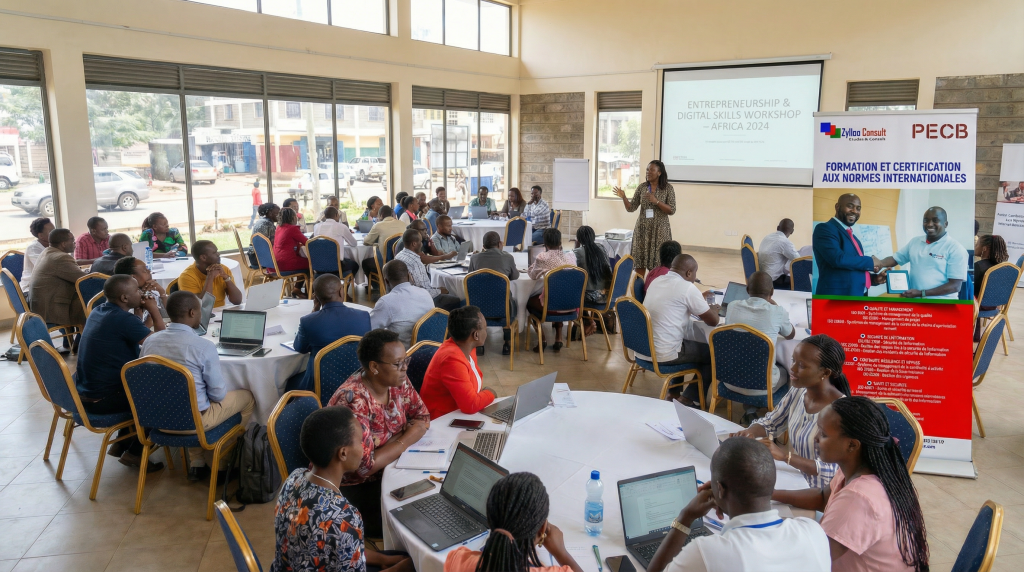
Many training programs fail because they are delivered as one-off events without follow-up, accountability, or real-world application. Effective training, on the other hand, is continuous, context-specific, and tied to measurable performance outcomes.
You have probably seen it happen more than once. A team member attends a well-regarded training programme, returns with a folder full of notes and a renewed sense of enthusiasm, and within a fortnight is doing exactly what they were doing before. The budget is spent. The energy fades. The behaviour remains unchanged. You are left wondering what the point was.
You are not alone in that frustration. Organisations around the world invest significant resources in training and development every year, yet a substantial portion of that investment produces little to no measurable return. Not because learning and development do not matter—it matters enormously—but because many training programmes are not designed to produce real, lasting change. Understanding why training fails is the first step toward fixing it.
The Format Problem
One of the most common reasons training does not work is its format. A one-off workshop, delivered once with no follow-up, no accountability, and no connection to the actual demands of the job, is almost guaranteed to fade without impact.
The human brain is not wired to retain information from a single session and then apply it effectively under real-world pressure weeks later. Learning that sticks requires repetition, practice, application, and reinforcement over time.
Generic training compounds the problem. When programmes are not tailored to the specific context of an organisation, the content often feels disconnected from the real challenges staff face daily. It may be interesting in theory, but difficult to apply in practice. The more abstract the learning, the less likely it is to translate into behavioural change.
The Accountability Gap
Another major reason training fails is the absence of accountability.
After training, employees typically return to environments where:
- No one is tracking whether new skills are applied
- Managers are unaware of what was learned
- Colleagues are not engaged in the same process
- There is no structured follow-up or reinforcement
In such environments, sustaining behavioural change depends entirely on individual discipline. Over time, even motivated employees revert to familiar habits.
What Actually Works
Effective training shares a number of key characteristics.
First, it is context-specific. It reflects the organisation’s realities, language, and operational challenges.
Second, it is structured as a process, not an event. Learning is delivered in stages, allowing time for application, reflection, and adjustment between sessions.
Third, it includes practical application. Participants work on real scenarios, not abstract examples.
Fourth, it embeds accountability mechanisms. These include follow-ups, coaching, peer learning, and performance tracking.
Fifth, it actively involves managers and leadership. When leaders reinforce learning in daily operations, the impact of training increases significantly.
Finally, effective training is measured. Not through end-of-session satisfaction forms, but through observable improvements in performance, behaviour, and results over time.
The Zylloo Difference
At Zylloo Consult, every training programme begins with a clear understanding of:
- The outcomes expected
- The gaps to be addressed
- The organisational context
- The mechanisms required to ensure learning transfer
We work with our clients before, during, and after training to ensure that learning translates into measurable results. Because training that does not lead to change is not an investment—it is a cost.
If your organisation is ready to move from training that simply looks good on a calendar to training that delivers real impact, it is time to rethink your approach.
At Zylloo Consult, we design training that works—because it is built for application, accountability, and results.
Ready to Make Training Actually Work? If your organization is investing in training but not seeing results, it is time to rethink your approach.
Contact Zylloo Consult today for a tailored Training Needs Assessment and performance-driven capacity building programs.